Andalusia
The southernmost region of Spain and the base of Inbound Spain's operations. Few destinations in Spain work as broadly as Andalusia. It handles first-time travelers, heritage clients, food and wine programs, and repeat visitors without requiring different infrastructure for each. The profiles below show you which of your clients belongs here and why.
Who this region suits
Match your client to Andalusia.
Andalusia is not one program. It rewards different clients in different ways. These are the profiles that consistently fit best.

The first-time Spain traveler.
Seville is the easiest city in Spain to understand on arrival: compact, walkable end to end in a morning, monuments exactly where a first-time visitor expects them. Andalusia removes the orientation problem without diluting the experience.
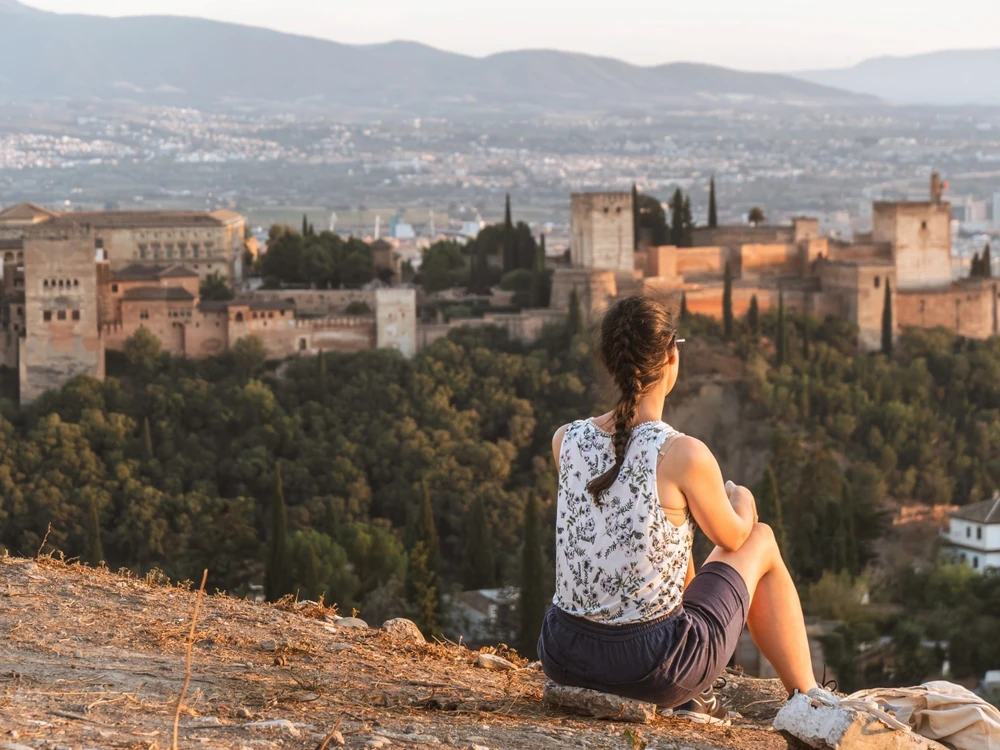
The history and architecture client.
The Mezquita in Cordoba produces the strongest reaction: a cathedral inserted directly into 856 columns of striped Moorish arches, faith built over faith across centuries. No other region in Europe layers its history this visibly.
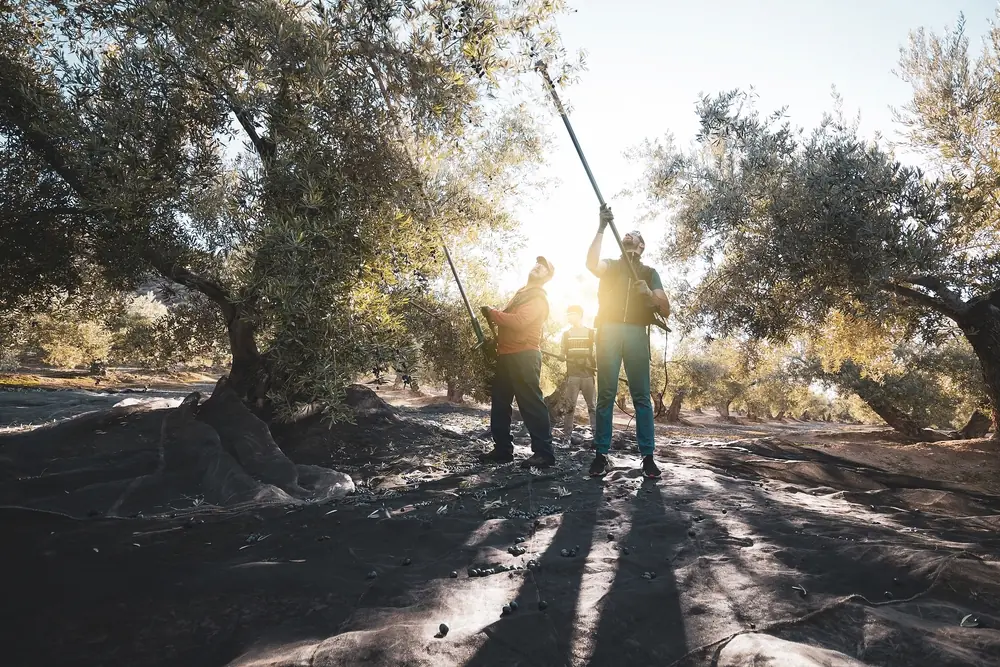
The food and sherry client.
Jerez produces sherry. Cadiz runs on Atlantic seafood. Jaen grows more olive oil than most countries. Tapas evolved in working-class bars, not restaurants, and the best of it still happens there. No weak stops for a client who travels to eat and drink.
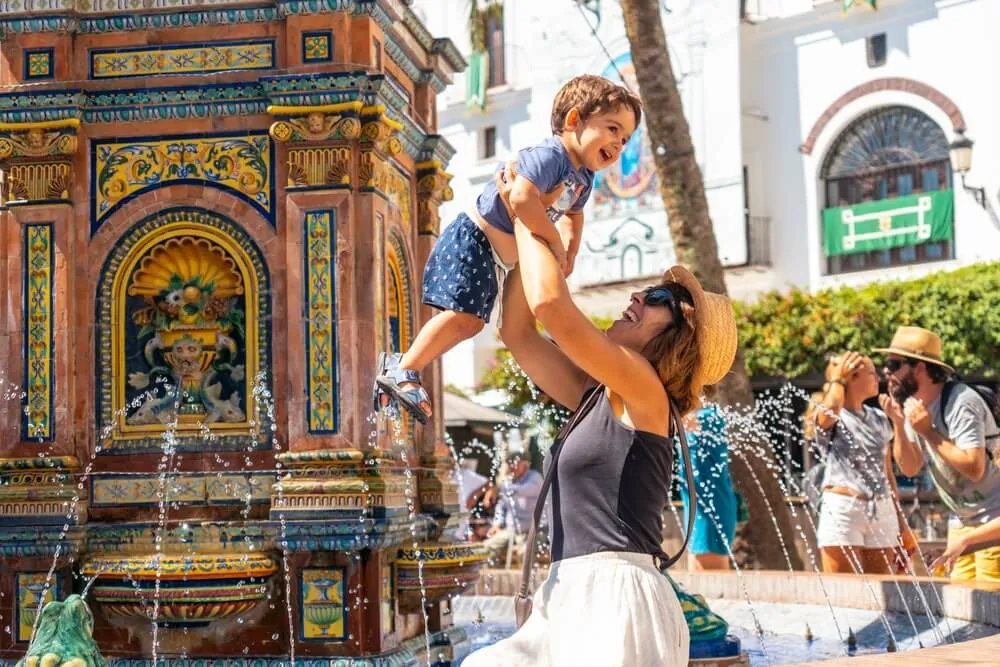
The repeat Spain traveler.
Clients who have done Seville and Granada will find Andalusia has more: Jerez for the bodegas, Cadiz for Carnival and coast, Ronda for the gorge, the white villages of Grazalema. Not additions to round out a program. A different Andalusia.
Programs in this region
Andalusia itineraries from the portfolio.
Three programs that route through Andalusia, designed for different clients and different depths of engagement.
Andalusia
The Moorish South
7 nights
Seville, Cordoba, and Granada. The three cities that define Andalusia's Moorish and Renaissance inheritance, sequenced to build in scale and depth. Frequently paired with a Morocco extension.
Andalusia + Madrid
The Southern Arc
9 nights
Madrid, Seville, Cordoba, and Granada. Spain's most-requested itinerary. A strong baseline for partners new to Spain, with AVE rail connections, established hotel inventory, and predictable logistics at any group size.
Andalusia (deep)
The Full Andalusia
10 nights
Seville, Jerez, Cadiz, Ronda, and Granada. The right program for culinary, wine, and equestrian clients, and for repeat travelers who have already covered the standard Andalusia triangle and want more from the region.
For travel professionals
Planning an Andalusia program.
Operational context for advisors and operators evaluating Andalusia for their programs.
When to come
September through May is the operational window. July and August bring heat that makes daytime touring difficult in Cordoba and Seville; Granada, at higher altitude, holds up better. Strongest seasons: spring (March through May) and autumn (September through November). Semana Santa in Seville needs 12 to 18 months of lead time for hotels and guides.
Getting here
Three international airports: Seville (SVQ), Malaga (AGP), and Granada (GRX). Malaga carries the most transatlantic connections and is the most common entry point; Seville and Granada suit loop itineraries that avoid doubling back. AVE reaches Seville from Madrid in 2.5 hours, Malaga in 2.25 hours.
Group considerations
Programs run comfortably at 2 to 24 travelers. The Alhambra is the binding constraint: timed-entry Nasrid Palace tickets sell out weeks ahead in high season. White village routing needs careful coach planning, and hotel inventory in Jerez and Ronda fills early in shoulder season, both worth contracting ahead of time.
What defines this region
Three things that shape every program here.
Andalusia's character is not a list of attractions. It is an accumulation of inheritances that mark every city differently and give every program a distinct texture.
Eight centuries that did not disappear.
Read the full story
The Alhambra books out weeks in advance in April. The Alcazar of Seville is still in active use by the Spanish royal family. The Mezquita in Cordoba, where the original mosque was built on a Visigothic church and a cathedral then inserted directly into the prayer hall after the Reconquista, is not a ruin or a museum. It is a working church with 800 years of prior occupation still visible in the columns around it. These are not monuments to a civilization that ended. They are records of a place being continuously repurposed, and Andalusia holds more of them than anywhere else in Europe.
A culture that did not stage itself for visitors.
Read the full story
The April Fair fills Seville for a week: families in traje de flamenca on horseback in the morning, the casetas running until dawn. It is a civic event that happens to be visible to visitors, not a spectacle organized for them. The tablaos in Triana run late because that is when flamenco happens, not because tour schedules require it. This is worth explaining to clients before they arrive. Andalusia rewards presence and patience. It does not perform on demand.
A food and wine tradition with nothing to prove.
Read the full story
Sherry is made from one grape, Palomino, grown on albariza chalk soil that holds moisture through the summer drought. The solera system means a glass of Fino contains wine blended forward across multiple decades. Jerez does not explain this quickly. Neither does the rest of the region: tapas culture evolved in working bars over centuries, Atlantic tuna has been salt-cured in Cadiz province since the Phoenicians, and Jaen's olive groves have been in production since Roman times. Clients who arrive with genuine curiosity will be occupied for the entire trip.
Common questions
Andalusia: what advisors and operators ask.
What makes Andalusia different from Madrid or Barcelona for a first-time Spain visitor?
Andalusia presents a layer of Spanish history that northern Spain does not: the Moorish period. The Alhambra, the Mezquita, and the Alcazar of Seville represent a specific cultural inheritance tied to eight centuries of Islamic rule and the subsequent Reconquista. For a first-time visitor who wants to understand Spain's full story, starting in Andalusia provides context that makes the rest of the country more legible. Madrid and Barcelona are essential for different reasons, but they do not tell this particular story.
Which Andalusia program is best for a client who has already visited Seville and Granada?
The Full Andalusia program routes through Seville, Jerez, Cadiz, Ronda, and Granada, bringing in the sherry country, the Atlantic coast, and the white village landscape that most first-visit programs skip. A client who has done the standard Andalusia triangle and wants to return should go deeper: Jerez for the bodegas and equestrian culture, Cadiz for the coast and the Carnival tradition, Ronda for the gorge and the bullfighting history. These are not supplemental experiences. They are a different program entirely.
When is the best time to run an Andalusia program?
September through May, with spring and autumn as the strongest windows for most client profiles. Summer is not a hard no: it works well for culinary and wine-focused clients whose days run flexible and evenings late, but the summer heat in Cordoba and Seville makes a packed, monument-heavy program a harder sell in July and August. Any program touching Semana Santa needs 12 to 18 months of lead time regardless of season, since hotel and guide availability lock early.
Does Inbound Spain operate in all parts of Andalusia, or mainly in the main cities?
All parts. Inbound Spain designs programs throughout Andalusia: the main triangle of Seville, Cordoba, and Granada; the Sherry Triangle around Jerez; the white villages of the Sierra de Grazalema; the Atlantic coast from Cadiz to Tarifa; and the olive country of Jaen province. Programs beyond the city centers require earlier supplier commitment and more detailed logistics planning, which is part of the design brief Inbound Spain builds with each partner from the first conversation.
How far in advance should we plan an Andalusia program?
For standard programs covering Seville, Cordoba, and Granada, six months is workable. For programs that include the Alhambra, Semana Santa in Seville, or sherry bodega experiences at top producers, 9 to 12 months is the appropriate lead time. Alhambra Nasrid Palace tickets sell out weeks in advance in high season, and Inbound Spain builds this constraint into program planning from the first proposal rather than treating it as a detail to resolve later.
Can Andalusia programs be combined with Morocco?
Yes. Tarifa and Algeciras, both in Cadiz province, have regular ferry service to Tangier. The Moorish South program (Seville, Cordoba, Granada) is frequently sold as a partner program to a Morocco extension, and the architectural and cultural continuity between the two destinations gives the combined itinerary a clear narrative thread. Inbound Spain handles the Spain side. Partners coordinate Morocco with their local ground operator in Tangier or Marrakech.