Cantabria
Cantabria solves a positioning problem most northern Spain itineraries never raise: proof that Green Spain is more than an extension of Asturias. It carries the cave paintings that forced the world to accept that Paleolithic humans made real art, the only building Antoni Gaudí completed outside Catalonia, and a wildlife park rebuilt inside an abandoned iron mine. The profiles below show you which of your clients belongs here and how Cantabria fits into a northern Spain program.
Who this region suits
Match your client to Cantabria.
Cantabria works differently depending on what the client is chasing. These are the profiles that get the most out of it.
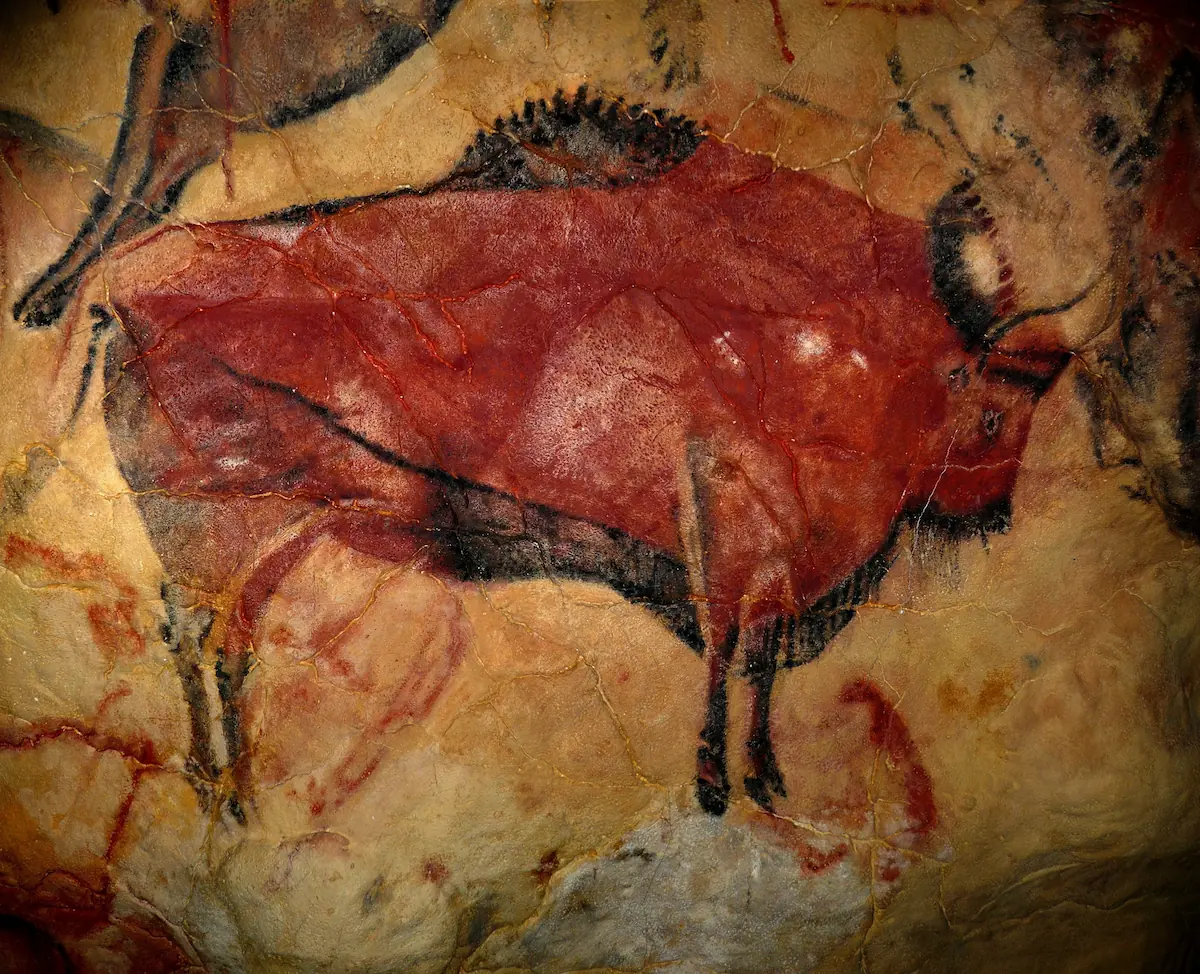
The prehistoric art client.
Cantabria holds the world's densest concentration of painted caves, over 60 sites, including El Castillo's 40,800-year-old red disk, Europe's oldest dated art. Altamira's Neocave replica reproduces the original bison ceiling from 3D laser scans after the real cave closed in 2002.
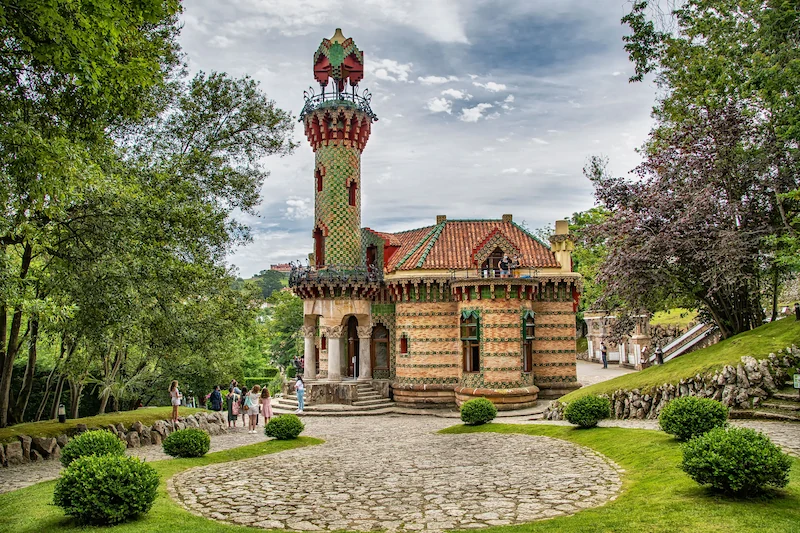
The architecture client.
Antoni Gaudí built exactly one structure outside Catalonia: El Capricho, a summer villa in Comillas commissioned by the brother-in-law of his own patron, Eusebi Güell. Its ceramic sunflower tiles and Mudejar tower mark his early, orientalist period.
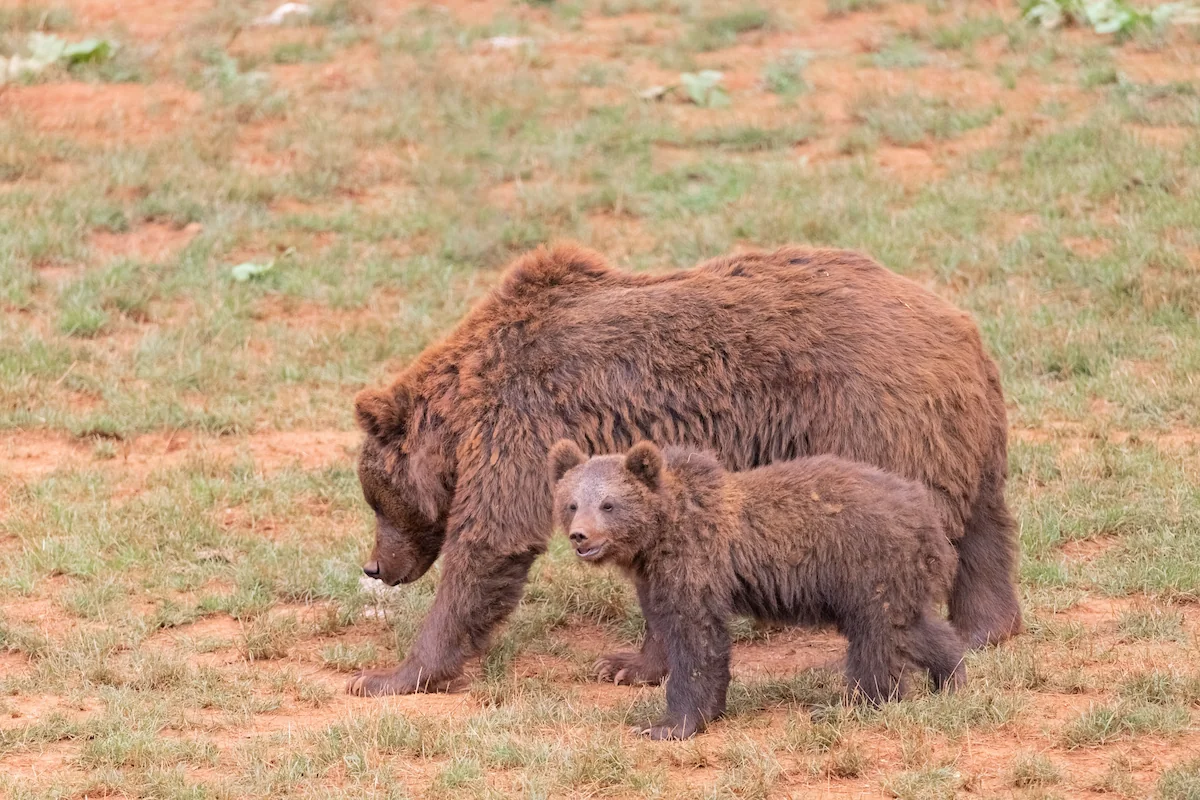
The nature and soft adventure client.
Cabárceno turned 750 hectares of abandoned open-pit iron mine into a wildlife park with the largest African elephant herd bred outside Africa. West of Fuente Dé, a cable car climbs into the Picos de Europa in under four minutes.
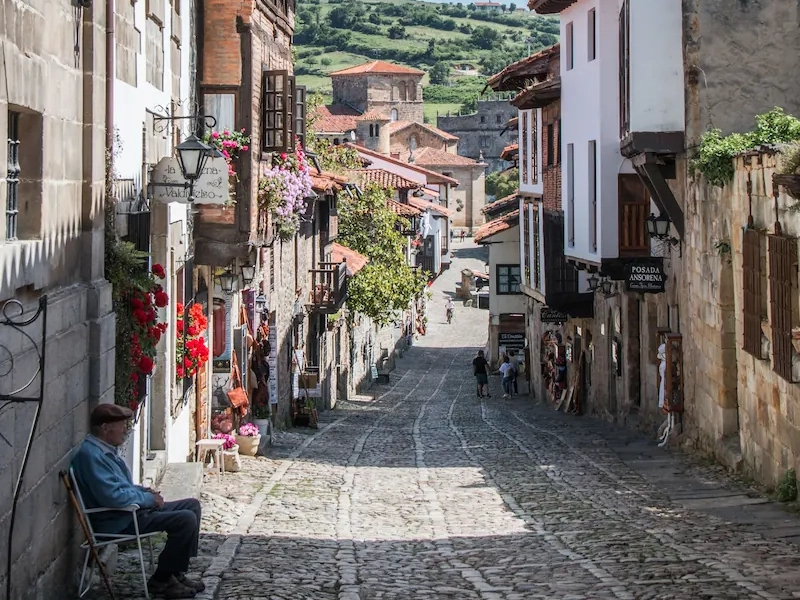
The coastal and village client.
Santillana del Mar preserved its medieval core well enough that Jean-Paul Sartre called it the prettiest village in Spain. Santander's Sardinero beach sits inside city limits, and fishing villages like San Vicente de la Barquera still work real boats off a real harbor.
Programs in this region
Cantabria itineraries from the portfolio.
Two programs that route through Cantabria, both built around a Green Spain or northern-arc structure rather than a Cantabria-only base.
Asturias + Cantabria
Green Spain
7 nights
Bilbao to Santander to the Picos de Europa, closing in Oviedo and Gijón. Cantabria's segment covers Santander's beaches, Cabárceno, and a Picos de Europa mountain day, a walking and soft-adventure pace built for clients who want Spain's coast outside the southern circuit.
Madrid + La Rioja + Basque Country + Cantabria + Asturias
The Basque Coast to Asturias
8 nights
A westbound line from Madrid through Rioja Alavesa and the Basque Coast into Cantabria and Asturias. The Cantabria day covers Santander, Comillas and El Capricho, and Santillana del Mar, before the road climbs to Fuente Dé in the Picos de Europa.
For travel professionals
Planning a Cantabria program.
Operational context for advisors and operators building Cantabria into a Spain program.
When to come
May through October gives the widest access: the Fuente Dé cable car and Cabárceno both run full operating hours, and coastal weather holds. Winter shortens cable car hours and can close some Picos de Europa access, though the Altamira Neocave and El Capricho stay open year round.
Getting here
Bilbao Airport, about ninety minutes by road, is the practical entry point for most Cantabria programs. Seve Ballesteros-Santander Airport (SDR) sits five kilometers from the center with a smaller route network. Madrid connects by highway in under five hours.
Group considerations
The original Altamira cave stays closed to all public visits; groups tour the Neocave replica, which caps visitor numbers by timed entry. El Capricho's compact villa format limits comfortable group size inside the house, particularly in July and August.
What defines this region
Three things every Cantabria program should account for.
Cantabria built its reputation on a cave that had to be closed to survive, a house built by accident of family ties, and a landscape that turned an industrial scar into a conservation asset.
Altamira closed to save what made it famous.
Read the full story
When Marcelino Sanz de Sautuola and his young daughter Maria first noticed the bison painted across Altamira's ceiling in 1879, the scientific establishment refused to believe Paleolithic humans could have made them; Sautuola was accused of forging the paintings himself and died before the art was widely accepted as genuine, a vindication that came only after similar caves were found across France decades later. The cave earned UNESCO World Heritage status in 1985 as part of a wider listing of Paleolithic cave art sites across northern Spain. Public visits through the 20th century brought enough foot traffic, humidity, and carbon dioxide that green mold began forming on the paintings by 2002, and the original cave was closed to all public access. What replaced it, the Neocave at the National Museum and Research Center of Altamira, is not a simplified stand-in: researchers used 3D laser scanning at roughly 40,000 data points per square meter to reproduce every bulge and crag of the original chamber, and painters recreated the bison ceiling using pigments and techniques close to those the original artists used. Groups touring the Neocave see the cave more completely, arguably, than any visitor to the real one ever could. Altamira is not the whole story either: Cantabria holds over 60 caves with confirmed prehistoric paintings, the highest concentration found anywhere in the world, and nearby El Castillo, part of the same UNESCO listing, holds a red disk dated to more than 40,800 years old, currently the oldest reliably dated art in Europe by at least 4,000 years. Some researchers have proposed the marks were made by Neanderthals rather than modern humans.
Gaudí built one building outside Catalonia, and it's here.
Read the full story
Every other Gaudí building a client is likely to already know, the Sagrada Família, Park Güell, Casa Batlló, sits in Barcelona. El Capricho, a summer villa built between 1883 and 1885 in the seaside town of Comillas, is the only structure Gaudí completed outside Catalonia, and it exists because of family ties rather than a public commission. Its patron, Máximo Díaz de Quijano, was the brother-in-law of Antonio López y López, the Marqués de Comillas, and the father-in-law of Eusebi Güell, the industrialist who would go on to become Gaudí's primary patron and the namesake of Park Güell. That connection put a young Gaudí, still years from his best-known Barcelona work, in charge of a U-shaped villa oriented to track the sun and shelter from Atlantic wind, its walls faced in ceramic tile painted with sunflowers, its entrance marked by a Mudejar-influenced tower. Díaz de Quijano died a year before construction finished and never lived in the house he commissioned. The building passed through private hands, became a restaurant in 1988, and opened as a museum in 2009, meaning a group can walk through an authentic, largely unaltered Gaudí interior most Spain-focused clients don't know exists.
Cabárceno turned an abandoned mine into a wildlife sanctuary.
Read the full story
For most of the 20th century, the hills west of Santander were an open-pit iron mine, worked hard enough to leave behind a cratered, cliff-walled landscape once the ore ran out. Rather than rehabilitate the site back to a flat, generic green space, Cabárceno's planners kept the karst topography the mining had exposed and built a wildlife park directly into it: 750 hectares of ridges, gorges, and rock walls now house roughly 100 species from five continents in enclosures large enough that animals move with something closer to real freedom than a conventional zoo allows. The park has become a genuine conservation asset rather than just a visitor attraction, running breeding programs for African elephants, Grévy's zebras, and white rhinoceros, and it now holds the largest herd of African elephants bred outside Africa on the strength of that program. Twenty kilometers of paths link the enclosures, walkable or drivable depending on group mobility and time. For a client base that associates Spain with cathedrals and tapas, Cabárceno is the detail that breaks the pattern: a landscape scarred by industry, deliberately kept rather than erased, now doing more for conservation than most purpose-built parks.
Common questions
Cantabria: what advisors and operators ask.
Should Cantabria stand alone as a program or pair with another region?
Cantabria works best paired with a neighboring region rather than carrying a full program on its own. Green Spain combines it with Asturias for a walking and nature-forward week, while The Basque Coast to Asturias folds a single Cantabria day, Santander, Comillas, and El Capricho, into a longer line from Madrid through the Basque Country. Either structure gives a client Green Spain's coast and mountains without asking a full week of the region alone.
How much time does a group need in Cantabria?
A single full day covers the essentials for most clients: the Altamira Neocave and museum in the morning, then Santillana del Mar's medieval core on foot in the afternoon. A second day allows for El Capricho and Comillas, plus either Cabárceno or a Picos de Europa excursion to Fuente Dé, depending on whether the group leans toward wildlife or mountain scenery.
Can groups actually see the real Altamira cave, or only the replica?
Only the replica, for nearly all groups. The original cave has been closed to public access since 2002 after visitor traffic caused mold growth on the paintings, and Spain's Ministry of Culture runs a small weekly lottery for five visitors at a time to the real cave, a process built for individual applicants rather than group bookings. Every Inbound Spain itinerary routes through the Neocave, a laser-scanned, hand-painted replica precise enough that the difference is largely academic for a trade client.
Does El Capricho work for larger groups?
It works, but the villa's compact, U-shaped floor plan limits how many people move through the interior comfortably at once. Groups above roughly 20 travelers benefit from splitting into two entry waves timed a few minutes apart rather than touring as a single block; confirm group-entry capacity with the museum at contracting, particularly in July and August.
Is Cabárceno worth a full day, or does it work as a half-day add-on?
Both work, and the choice depends on the group's pace. A half-day covers the main enclosures by vehicle along the park's twenty kilometers of paths, enough to see the elephants, rhinos, and big cats without a long stay. A full day suits clients who want to walk sections on foot and take in the mining-scarred landscape itself, not just the animals, at a slower pace.
When is the best time to run a Cantabria program?
May through October gives the most reliable access: the Fuente Dé cable car and Cabárceno both run full operating hours, and coastal weather holds for Santander's beaches and Santillana del Mar's outdoor spaces. Winter shortens cable car hours and can close some Picos de Europa access outright, though the Altamira Neocave and El Capricho stay open year round, which keeps a winter program workable if it leans on indoor cultural sites over mountain excursions.
How does Cantabria connect to the rest of a northern Spain program?
Bilbao Airport, about ninety minutes by road, is the practical entry point for most Cantabria programs and also anchors the Basque Country segment many itineraries pair it with. Santander has its own airport, Seve Ballesteros-Santander (SDR), with a smaller route network, useful when a program starts or ends in Cantabria directly rather than routing through Bilbao. Both Green Spain and The Basque Coast to Asturias use Cantabria as a bridge, not an endpoint, between the Basque Country and Asturias.
What should advisors know about pairing Gaudí interest with a Cantabria program?
Clients drawn to Gaudí because of Barcelona often don't know a second, complete Gaudí building exists at all, which makes El Capricho a strong differentiator for repeat Spain travelers or design-focused clients who have already done Barcelona. It reads differently from his later Barcelona work, a restrained, early-period villa rather than an eccentric cathedral, so set that expectation rather than positioning it as a smaller version of the Sagrada Família.
Is Cantabria a recognized destination internationally, or does it still feel undiscovered to clients?
Both, and that combination is part of the pitch. Lonely Planet named Cantabria the second-best destination in Europe to discover in 2018, the only Spanish region on that list, citing Santander's Renzo Piano-designed Centro Botín waterfront and the region's ferry connections to the UK and Ireland alongside the Picos de Europa's centennial as Spain's first national park. At the same time, Cantabria draws a fraction of the visitor volume of Barcelona or Andalusia, so clients get a region with real international credibility and comparatively light crowds, a combination that gets harder to find the further south a Spain itinerary runs.