Valencia
Valencia solves a problem Madrid and Barcelona can't: a major Spanish city that still reads as a discovery to well-traveled clients. It carries a Gothic silk exchange that UNESCO lists in its own right, a contemporary architecture complex designed by its own native son, a food culture that invented the country's most exported dish, and a beach inside city limits, all without the saturation Barcelona has taken on. The profiles below show you which of your clients belongs here and how Valencia fits into the rest of their Spain program.
Who this region suits
Match your client to Valencia.
Valencia works differently depending on what the client is chasing. These are the profiles that get the most out of it.
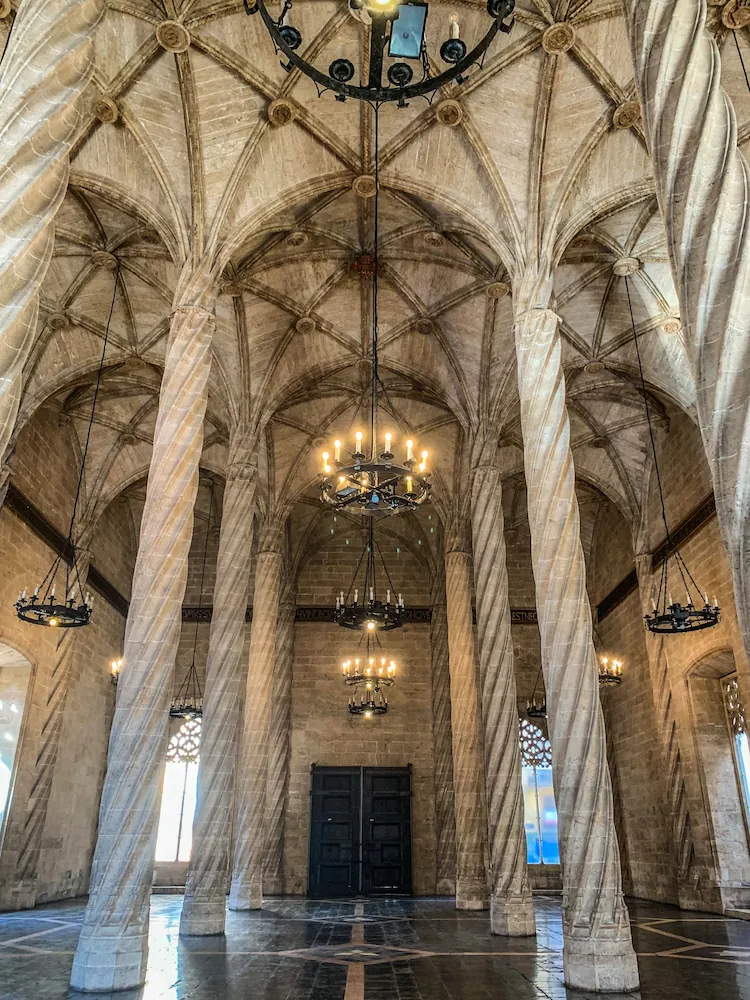
The architecture client.
The Lonja de la Seda's spiral columns have braced silk traders since the late 1400s, a Gothic hall UNESCO lists as its own World Heritage Site. Six blocks away, Valencia-born Santiago Calatrava built the City of Arts and Sciences: two architectural eras, one walk.

The market and rice client.
Valencia invented paella, and the rice still grows twenty minutes south at the Albufera lagoon where the dish was born. Mercat Central, one of Europe's oldest working markets still in daily use, sells that rice next to everything else a real paella needs.
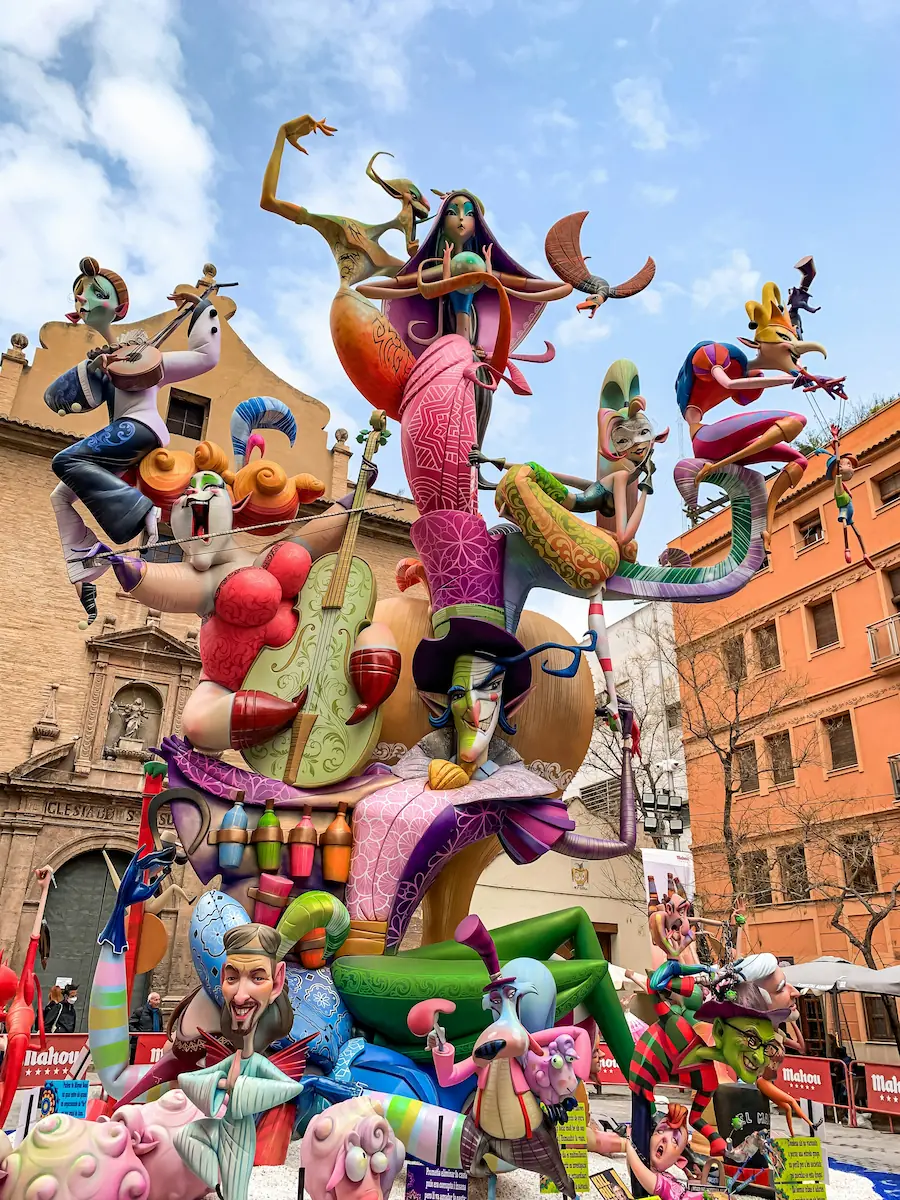
The festival client.
For five days each March, Valencia builds room-sized satirical sculptures on street corners citywide, then burns nearly all of them on the final night. The daily midday mascletà, a scored fireworks concert felt as much as heard, makes this Spain's least subtle festival.
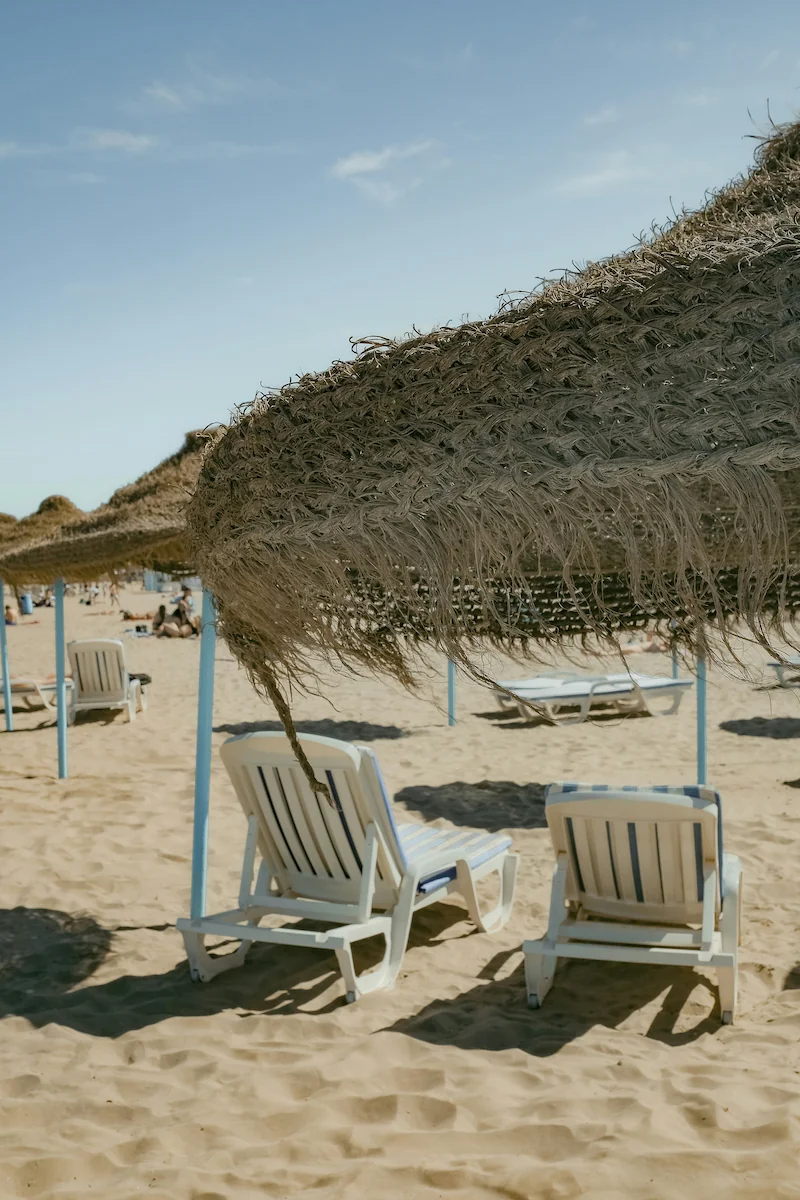
The beach client.
Malvarrosa is a real sand beach within city limits, not a resort town bolted onto a historic center. A morning at the Lonja or the Central Market, a taxi ride to the sand by early afternoon: Valencia's coast asks for no separate day, no separate hotel.
Programs in this region
Valencia itineraries from the portfolio.
Three programs that route through Valencia, from a national rail itinerary to a two-city festival program.
Madrid + Catalonia + Valencia
High-Speed Spain
9 nights
Madrid, Valencia, and Barcelona, connected by AVE with no leg over two hours. Valencia sits at the midpoint, not an afterthought: two days for the Lonja, the Central Market, and the City of Arts and Sciences before the rail continues north.
Catalonia + Valencia
Barcelona & Valencia: Festival Season
6 nights
Barcelona and Valencia, timed to one of two fixed windows: Las Fallas in March or Festes de la Mercè in September. Both festivals close with fire, and the routing runs in whichever direction lands the group on the peak night.
Andalusia + Madrid + Valencia
The Market Circuit
8 nights
Seville, Madrid, and Valencia, built around three distinct market cultures rather than three cities' monuments. Tapas bars, historic covered markets, and the rice country south of Valencia carry the program from start to finish.
For travel professionals
Planning a Valencia program.
Operational context for advisors and operators building Valencia into a Spain program.
When to come
April through June and September through November are Valencia's strongest months for a standard sightseeing pace: mild weather and rates below peak summer. Mid-March is different: Las Fallas fills the city on a fixed five-day window and pushes hotel rates well above normal, workable only for programs built around the festival itself.
Getting here
Valencia Airport (VLC) sits eight kilometers from the center, about twenty-five minutes by metro. The AVE to Madrid runs one hour forty minutes, one of the fastest routes on the network; Barcelona is reachable in under three hours by rail as well.
Group considerations
Mercat Central closes by early afternoon and stays shut on Sundays, so a market visit needs a morning slot, not an add-on before dinner. Group programs touching Las Fallas should contract lodging at least a year ahead: the festival's five-day window compresses citywide inventory that shoulder-season programs never face.
What defines this region
Three things every Valencia program should account for.
Valencia built its own architecture, food culture, and civic calendar before Madrid or Barcelona became the reference points most clients arrive with.
Valencia never tried to be a smaller Barcelona.
Read the full story
Valencia was the capital of its own kingdom for five centuries before it was ever a regional city inside a unified Spain, and that independent history shows up more than most visitors expect. The Lonja de la Seda was built at the height of Valencia's own silk-trading wealth in the late 1400s, decades before Barcelona's Eixample expansion gave that city its architectural signature. The huerta, the irrigated farmland ringing the city, has grown rice and produce on the same Roman and Moorish-built irrigation channels for over a thousand years, and that agricultural surplus is the reason Mercat Central exists at the scale it does. Even the City of Arts and Sciences, the closest thing Valencia has to a Bilbao-style signature project, was built by a Valencia-born architect through the city's own institutions. None of it reads as an answer to Madrid or Barcelona. It reads as a city that solved its own architecture, food, and civic identity questions on its own timeline, then let the rest of Spain catch up to noticing.
Paella came from the rice paddies, not the tourist menu.
Read the full story
The Albufera, a freshwater lagoon and rice-growing wetland just south of the city, has produced the short-grain rice behind paella since at least the eighteenth century, when Valencian farm laborers cooked rice, beans, and whatever meat was on hand over an open fire at midday. The dish that resulted, cooked in a wide shallow pan called a paellera, has stricter rules here than its international reputation suggests: rabbit, chicken, and snails belong in a Valencian paella, while seafood paella is a separate, coastal-city dish that Valencians consider distinct rather than interchangeable. Mercat Central, the modernist iron-and-glass market that opened in 1928, still sells that Albufera rice alongside the saffron, beans, and vegetables a proper paella requires, and the vendors toward the back have supplied the same restaurant kitchens for generations. A guide who explains the difference between the two paellas, and takes a group to the Albufera itself rather than just to a restaurant, gives a culinary program real depth instead of a single meal.
Las Fallas is a civic ritual, not a tourist spectacle staged for visitors.
Read the full story
Las Fallas grew out of a carpenters' tradition of burning old wood and worn-out tools in bonfires to mark the arrival of spring, and it kept that structure even as the sculptures themselves became enormous, satirical, and expensive. Each neighborhood's casal faller, a local committee, spends the better part of a year designing, funding, and building its falla, a room-sized sculpture that skewers politicians, celebrities, and local grievances in equal measure. For five days in March, hundreds of these sculptures fill street corners across the city, judged and ranked before nearly all of them burn on the final night in a coordinated citywide bonfire called La Cremà. The daily mascletà, a scored fireworks display built around rhythm and percussion rather than visual spectacle, draws a dense crowd to the Plaza del Ayuntamiento at exactly two in the afternoon regardless of weather. None of it was built for visitors. Tourism arrived afterward and adapted to a schedule the city had already set for itself.
Common questions
Valencia: what advisors and operators ask.
Should Valencia stand alone as a program or pair with another city?
Both work, and the right choice depends on what the program needs to accomplish. High-Speed Spain treats Valencia as the midpoint of a Madrid-to-Barcelona rail line, two days of the Lonja, the market, and contemporary architecture between two AVE legs, which suits first-time Spain travelers who want three cities on one thread. The Market Circuit pairs Valencia with Seville and Madrid around food and market culture specifically, a stronger fit for culinary-focused clients or operators building a gastronomy brand. Barcelona & Valencia: Festival Season stands apart from both: a two-city program built entirely around Las Fallas or Festes de la Mercè, for clients who want spectacle over a standard sightseeing pace.
How much time does a group need in Valencia?
Two full days cover the core: the Lonja de la Seda, Mercat Central, the old town on foot, and a half-day at the City of Arts and Sciences. A third day allows for the Albufera rice paddies and a proper paella lunch in El Palmar, or an afternoon at Malvarrosa beach without cutting the cultural sites short. Programs built around Las Fallas need a minimum of two nights inside the five-day window to see both a mascletà and La Cremà, since the two events fall on different days.
Does the City of Arts and Sciences require advance booking for groups?
The complex itself is a public promenade with no entry fee, but its individual venues, the Oceanogràfic aquarium, the Hemisfèric planetarium, and the Museum of Sciences, each sell timed tickets and cap group entry separately. A group visiting more than one venue in a single day should book each ticket at contracting rather than assume same-day availability, particularly during Semana Santa, summer, and the Las Fallas week, when local school groups and other operators compete for the same slots.
What does it take to build a program around Las Fallas?
Las Fallas rewards clients who want spectacle and civic energy over a quiet sightseeing pace, and it works against clients who are noise-sensitive, mobility-limited, or traveling with very young children: the mascletà is genuinely loud, and La Cremà brings open flame close to dense crowds. Contract lodging at minimum a year ahead, since the five-day window compresses citywide inventory the way a single conference date does in other cities, but spread across an entire week rather than a weekend. Programs for repeat Spain clients or advisors looking to differentiate from a standard itinerary get the most value from the festival; first-time Spain travelers are usually better served by a standard-pace visit outside the Fallas window.
Is Valencia's paella culture something a group program can experience authentically, or is it mostly a tourist version?
Both versions exist side by side, and the difference is a matter of routing rather than luck. Restaurants immediately around the historic center and the beachfront skew toward a tourist-menu version built for turnover. The stronger experience runs through Mercat Central for the ingredients, then out to El Palmar or another Albufera-side village for the meal itself, where restaurants still cook paella over a wood fire and serve the traditional rabbit-and-chicken version rather than a seafood paella aimed at coastal visitors. Building in that market-to-lagoon sequence, rather than a single restaurant stop, is what separates a real culinary program from a paella dinner bolted onto a sightseeing day.
When is the best time to run a Valencia program?
April through June and September through November suit the widest range of client profiles: mild weather, manageable crowds, and rates below summer peak. Summer works for beach-forward programs willing to trade a heavier crowd and heat at the historic sites for pool and Malvarrosa time. Mid-March is the one date that changes the entire calculation: running a standard cultural program through Las Fallas week means competing with festival crowds for restaurant tables and museum entry without the payoff of the festival itself, so that window should be either fully built around Las Fallas or avoided outright, not treated as an ordinary shoulder-season week.
How does Valencia connect to Madrid and Barcelona for a multi-city program?
The AVE to Madrid runs one hour forty minutes, among the fastest routes on the Spanish high-speed network, which is why Valencia works cleanly as a two- or three-night addition to a Madrid-based program. Barcelona is reachable in under three hours by rail as well, making the Madrid-Valencia-Barcelona sequence used in High-Speed Spain operationally straightforward: three cities, two rail legs, no leg longer than three hours. Valencia Airport also runs some direct European connections, though most U.S. and Canadian travelers still route through Madrid or Barcelona.
Is a beach day in Valencia worth adding, or does it feel like a detour from the cultural program?
It rarely feels like a detour, because Malvarrosa sits inside city limits rather than requiring a separate hotel or a full travel day. A group can spend the morning at the Lonja or Mercat Central and be on the sand by early afternoon without changing hotels, which makes a half-day beach addition low-cost relative to programs where the coast requires its own base. A full beach day makes more sense for programs already running a relaxed pace, or for clients whose interest in Valencia leans toward leisure rather than architecture and market culture specifically.