Asturias
Most trade partners treat Asturias as the last stop on a northern Spain circuit, the region added on once Bilbao and San Sebastián have already carried the trip. That undersells a place that is actually the origin point of medieval Christian Spain, with its own UNESCO monuments, its own cider culture, and enough depth to anchor a program on its own rather than close one out. The profiles below show which of your clients belongs here, and how far past a coastal drive-through the region goes.
Who this region suits
Match your client to Asturias.
Every client pictures green hills and coastline. These are the profiles that use the rest of the region.
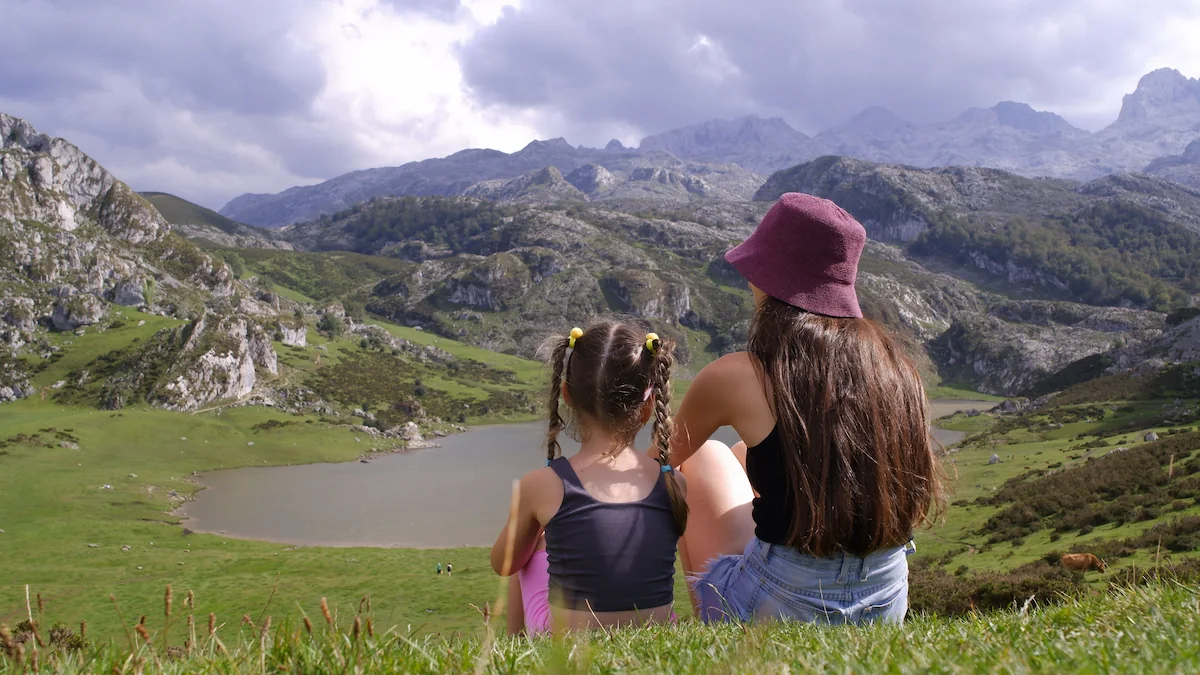
The nature and soft adventure client.
The Covadonga Lakes sit inside Picos de Europa National Park, reached by a road closed to private vehicles at peak summer hours in favor of shuttle buses. The Senda del Oso rail trail and Las Xanas Gorge add an easy ride and a canyon walk to the same range.
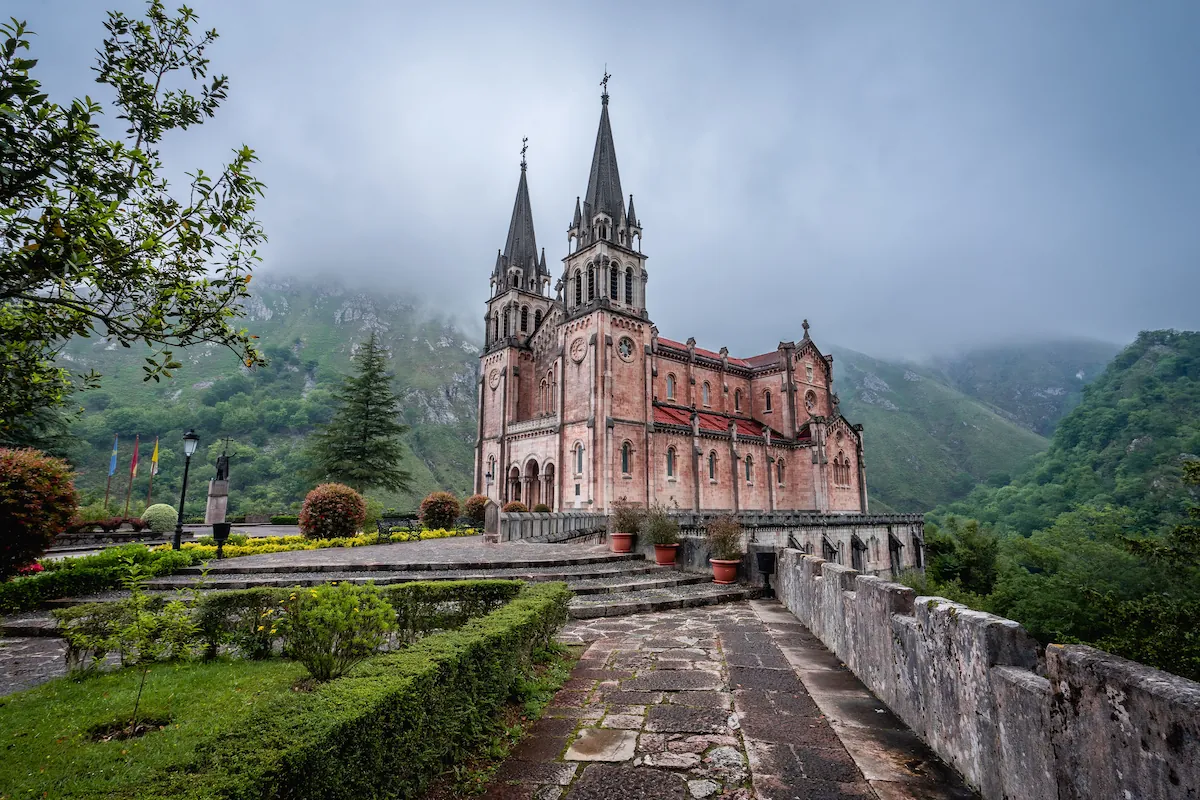
The heritage and UNESCO client.
Oviedo's Pre-Romanesque monuments on Mount Naranco predate most of what travelers see anywhere else in Spain, built when Asturias was Christian Spain's last unconquered kingdom. The Cathedral's Holy Chamber and Covadonga's sanctuary, tied to that kingdom's founding, complete the story.
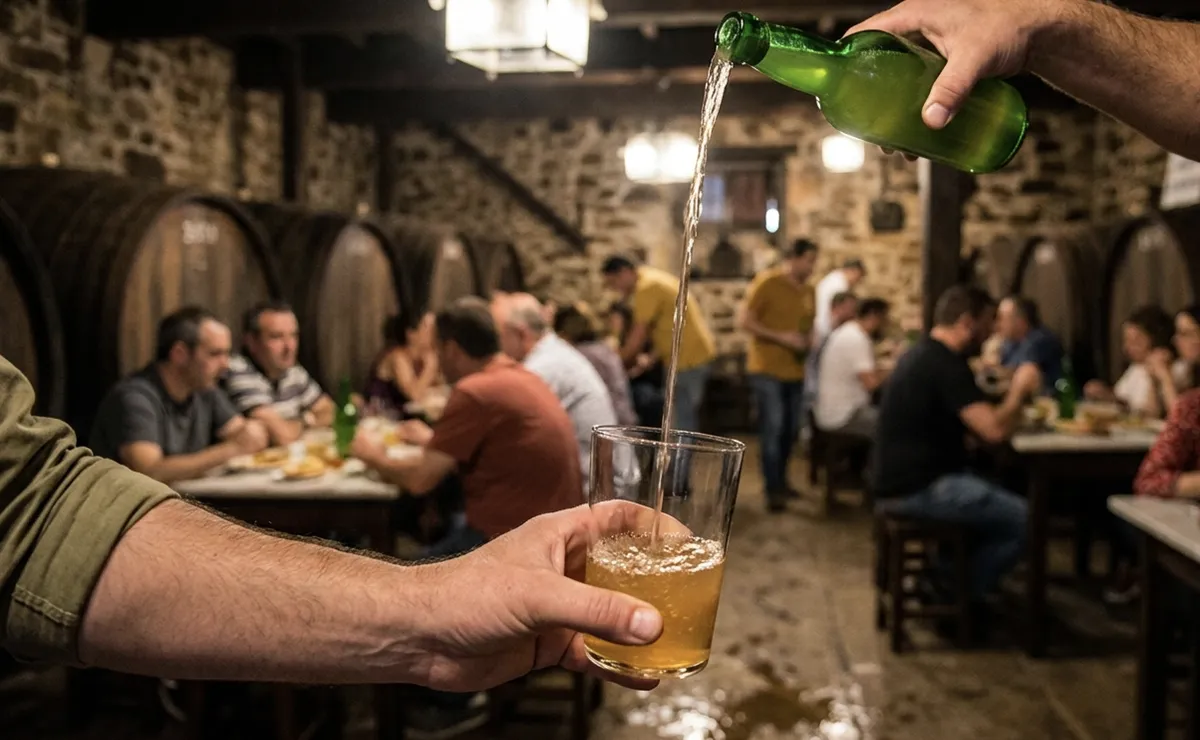
The cider and rural gastronomy client.
A llagar visit teaches the pour, cider thrown from shoulder height to aerate before drinking, a ritual older than the region's UNESCO monuments. Inland, Fuentes del Narcea Natural Park holds a DOP winery, the region's last black pottery artisan, and dishes rarely found elsewhere.
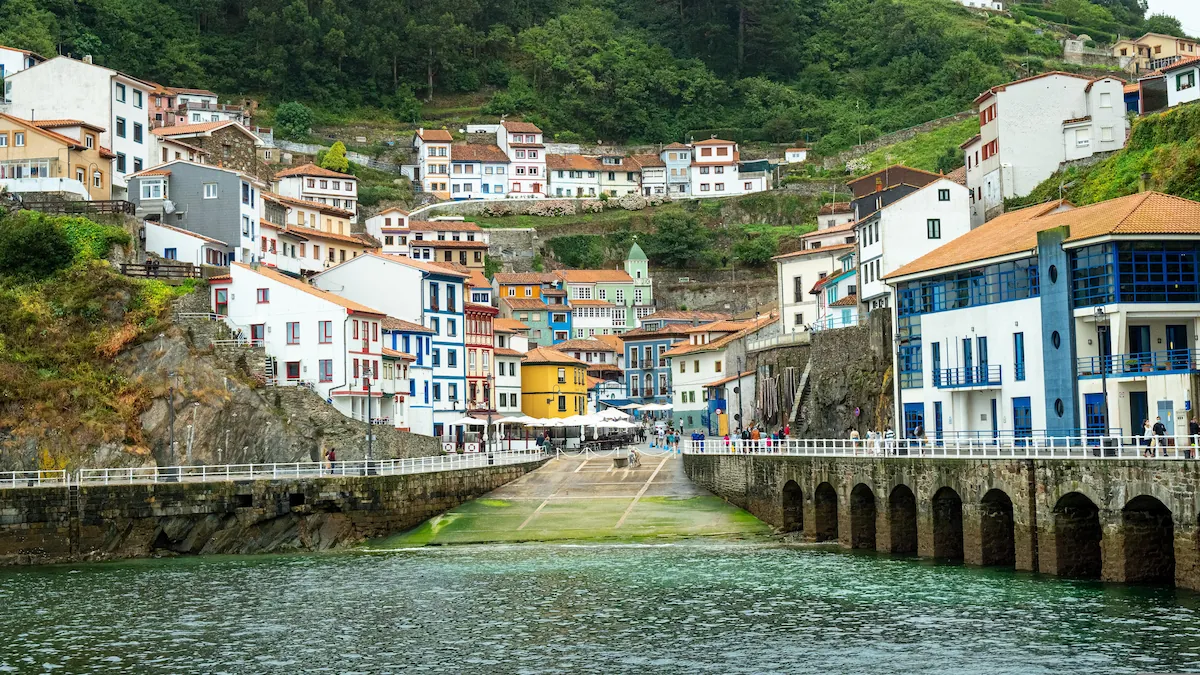
The coastal and village client.
Cudillero's amphitheater of pastel houses drops straight into its fishing harbor, one of several working ports along a coastline that includes the cliffs at Cabo Vidio. Avilés and Gijón's Cimavilla quarter add medieval arcades and a former fishing neighborhood to the same line.
Programs in this region
Asturias itineraries from the portfolio.
Two programs that put Asturias on the map, from a walking and soft adventure pairing with Cantabria to a five-region northern Spain circuit.
Asturias + Cantabria
Green Spain
7 nights
Bilbao, Santander, Picos de Europa, Oviedo, and Gijón on a walking and soft adventure line built for partners seeking Spain itineraries outside the southern circuit. Rural hotel inventory requires early commitment at scale.
Madrid + La Rioja + Basque Country + Cantabria + Asturias
The Basque Coast to Asturias
8 nights
A westbound line from Madrid through Rioja Alavesa wine country, the Basque Country and Bilbao, Cantabria, and the Picos de Europa before closing in Asturias. Five regions on one itinerary, designed and operated directly by Inbound Spain.
For travel professionals
Planning an Asturias program.
Operational context for advisors and operators building Asturias into a Spain program.
When to come
April through October covers the region's outdoor season, though May through September gives the most reliable weather for the Picos de Europa and coastal walking. The Covadonga Lakes road restricts private vehicles during peak summer midday hours, running shuttle buses instead, which affects itinerary timing in July and August.
Getting here
Asturias Airport (OVD), near Avilés, is the regional gateway, about 45 minutes from Oviedo. Asturias does not currently have full high-speed rail service, so multi-region programs typically enter by road from Madrid or Bilbao Airport (BIO) and close at Asturias Airport.
Group considerations
Oviedo's old town, the coastal villages, and Picos de Europa viewpoints run comfortably for groups up to twenty-four. The Fuente Dé cable car and select llagar visits run on limited capacity, and current directly operated programs are built around groups of eight to ten, with multi-vehicle scaling confirmed at contracting.
What defines this region
Three things every Asturias program should account for.
The region earned its monuments, its cider ritual, and its mountain-to-coast geography from a history and terrain most clients never connect to a green landscape.
Asturias's monuments predate the idea of "Christian Spain" itself.
Read the full story
After the Moorish conquest of the Iberian Peninsula in 711, a small Christian kingdom took shape in the mountains of Asturias, the only region the invading forces never fully controlled. Tradition holds that this kingdom began at the Battle of Covadonga, fought in a cave sanctuary now marked by the Sanctuary of Covadonga, and that its early kings are considered the starting point of the centuries-long Reconquista that would eventually reshape the peninsula. Under King Ramiro I in the ninth century, the kingdom built Santa Maria del Naranco and San Miguel de Lillo on Mount Naranco above Oviedo, structures in a distinct architectural style found nowhere else in the world and inscribed by UNESCO in 1985. Oviedo's Cathedral of San Salvador, begun centuries later, still holds the Camara Santa, a Holy Chamber housing one of the largest surviving collections of medieval reliquaries in northern Spain. A heritage client walking this route is not visiting a regional history museum. They are standing at the point where the idea of a unified Christian Spain first took physical form.
Asturian cider is a ritual, not a beverage category.
Read the full story
Sidra natural, Asturian cider, ferments without added carbonation, which leaves it flat and closed off in the bottle until it is poured. The escanciar technique, thrown from the bottle held high overhead into a glass held low, aerates the cider on its way down and is meant to be drunk within minutes, while that aeration still holds. The practice is centered in a designated DOP zone around Villaviciosa and Nava, produced mostly at small, family-run llagares, cider cellars, rather than large commercial operations, and a llagar visit typically walks a client through pressing, fermentation, and the tasting itself. Sidrerias extend the ritual into daily life: patrons order a culin, a small pour meant to be finished immediately, standing at the bar rather than seated with a full glass. The tradition sits close to, but distinct from, the txotx cider houses of the Basque Country just across the regional border, a useful point of contrast for a client doing both regions on one trip.
Asturias's coastline and mountains sit closer together than almost anywhere else in Spain.
Read the full story
The Picos de Europa rise to over 2,600 meters within sight of the Cantabrian Sea, a mountain range compressed into a narrow strip of northern Spain shared by Asturias, Cantabria, and Castilla y Leon. Declared Spain's first national park in 1918 under the name Montana de Covadonga, the range's limestone core has been dissolved by water over millions of years into a network of caves, several of which are used today to age Cabrales, the region's blue cheese, in conditions that cannot be replicated artificially. That same compressed geography puts a fishing village like Cudillero, a converted rail trail like the Senda del Oso, and an alpine lake like Enol within a short drive of one another, letting a single day cover terrain that would take multiple stops almost anywhere else in Spain. The Las Xanas Gorge, a narrow limestone canyon walk near the coast, is a smaller-scale version of the same geology that built the Picos themselves.
Common questions
Asturias: what advisors and operators ask.
Should an Asturias program pair with Cantabria, or anchor a full northern Spain circuit?
Both work, and the choice depends on how much of the north the client wants to cover. Green Spain pairs Asturias with Cantabria on a walking and soft adventure line, Bilbao to Santander to the Picos de Europa to Oviedo and Gijon. The Basque Coast to Asturias goes furthest, a westbound circuit from Madrid through Rioja Alavesa wine country, the Basque Country, and Cantabria before closing in Asturias, suited to clients who want the full northern arc rather than a two-region pairing. Asturias does not currently anchor a single-region program on its own in the portfolio.
Is Asturias mainly a nature destination, or does it work for heritage and architecture-focused clients?
Asturias supports heritage programming as strongly as it supports nature and soft adventure. Oviedo's Pre-Romanesque monuments on Mount Naranco are UNESCO-listed and among the oldest Christian buildings in Spain, built when Asturias was the only part of the peninsula never held by the Moors. The Cathedral's Holy Chamber and the Sanctuary of Covadonga, tied to the founding of the medieval Asturian Kingdom, add further depth. A program built around this history, with the Picos de Europa and coastline layered in, gives an accurate picture of the region rather than treating it as scenery alone.
What makes Asturian cider different from cider elsewhere in Spain?
Asturian cider, sidra natural, is still rather than sparkling, and it is poured from shoulder height into the glass, a technique called escanciar that aerates the drink and is meant to be consumed within minutes of the pour. The practice is centered in a designated DOP region around Villaviciosa and Nava, produced mostly at small, family-run llagares rather than large commercial operations. A llagar visit and tasting shows a client the full process; a sidreria adds the standing-at-the-bar culture built around it, distinct from Basque txotx cider houses just across the regional border.
Does the Covadonga Lakes road require special planning for a group itinerary?
Yes. The road to the Covadonga Lakes, Enol and Ercina, restricts private vehicle access during peak midday hours in the summer season, running a shuttle bus service instead to manage traffic in the Picos de Europa National Park. Programs built around this stop in July and August need the visit timed to shuttle hours or scheduled outside the restricted window, a scheduling detail that should be confirmed at contracting rather than assumed flexible on arrival.
What time of year works best for an Asturias program?
It depends on which part of the region leads the program. Heritage and cider clients, focused on Oviedo's monuments and llagar visits, are largely indoor or urban experiences that hold up well across most of the year. Nature, coastal, and Picos de Europa clients are better served May through September, when mountain and hiking conditions are most reliable and the Covadonga Lakes shuttle system is running at full capacity. A program mixing both should weight outdoor days toward this window and treat the shoulder months as the heritage-forward stretch.
How does Asturias connect to the rest of a northern Spain itinerary?
Asturias Airport (OVD), near Avilés, is the regional gateway and the standard exit point for programs that close there. Asturias does not currently have full high-speed rail service, so most multi-region itineraries enter by road, from Madrid through Rioja Alavesa and the Basque Country, from Bilbao Airport along the coast, or from Cantabria through the Picos de Europa. The Basque Coast to Asturias program uses this road routing to connect five regions on a single westbound line ending at Asturias Airport.
Can an Asturias program accommodate dietary restrictions like vegetarian or gluten-free travelers?
Yes. Asturian cuisine reads as meat and cheese-heavy from the outside, but restaurant selection and menu planning around dietary needs is standard practice on Inbound Spain programs in the region, including a confirmed itinerary built entirely around a vegetarian couple with restaurant recommendations tailored to that restriction throughout. Flag dietary requirements at the brief stage so llagar lunches, sidreria visits, and farewell dinners can all be selected or adjusted with the restriction in mind rather than worked around after arrival.
What group size works best for an Asturias program?
Most of the region, Oviedo's old town, the coastal villages, and the Picos de Europa viewpoints, runs comfortably for groups up to twenty-four. Two considerations narrow that range: the Fuente Dé cable car and select llagar visits run on limited capacity, and Inbound Spain's directly operated Asturias programs are currently built and costed around private groups of eight to ten travelers on a single van, with multi-vehicle scaling confirmed at contracting for larger operator series.
Does Inbound Spain operate directly in Asturias, or work through a local partner?
Both current Asturias programs, Green Spain and The Basque Coast to Asturias, are designed and operated directly by Inbound Spain end to end, with no subcontracted regional ground partner in the routing. That keeps contracting, guide selection, and on-trip support under a single point of accountability for the full stay. This is a deliberate difference from some of Inbound Spain's other regional programs, where a vetted local specialist handles supplier relationships that would otherwise take years to build independently; ask at the brief stage if a client's program calls for that kind of hyper-local sourcing.